


What if our biggest problems aren’t hidden because they’re invisible, but because we’ve classified them incorrectly?
This week I explore what a municipal expense audit, legal taxonomies, document management, and corporate governance reveal about the way we organize our lives. From the “other” category on an expense report to the junk drawer in your kitchen, the same pattern appears: when we don’t know where something belongs, we don’t eliminate it. We simply stop seeing it clearly.
Through the lens of Field Literacy, I examine why structure matters, why classification shapes perception, and how the Four Conditions help us trace responsibility instead of treating symptoms.
Because there is no such thing as “other.” There are only things we haven’t learned to place yet.
I love you,

I love hearing from you, so don’t be shy - sound off in the comments, send me a message or send me an email.
00:00 What is your inner weather trying to tell you?
07:00 What is Field Literacy, and why does it change how we see the world?
18:00 What does the HRM audit actually reveal?
28:00 Why “other” might be the most dangerous category in governance
39:00 What if your life has a taxonomy too?
50:00 Where are you misclassifying your own experience?
58:00 What changes when everything has a rightful place?
References:
The Daily Sovran: A Seasonal Devotional for Witnessing Your Sovran Life
Sovran Wellth Keys: The Structural Language of Trust for Embodied Field Literacy
https://nicoleconnor.substack.com/p/field-literacy-activation-series-09
https://nicoleconnor.substack.com/p/hear-something-say-something
https://nicoleconnor.substack.com/p/grounded-presence
This is The Trust Effect.
If you can see it, you can change how you participate in it.
Live Tuesdays at 9am AST / 8am EST.
*subject to change during the summer based on the lawn maintenance schedule
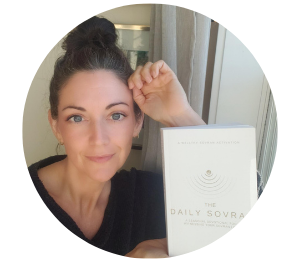
Nicole Connor is a Perceptual Architect, author, and sole creator of Sovran Wellth™, an ecosystem built on The Four Conditions™ that govern trust and wellth across the nine fields of life. Through this work, she establishes Perceptual Architecture as a structural, field-based discipline for making the conditions of trust visible.


