


Public life doesn’t only happen in council chambers or election cycles. It happens in the middle of ordinary days, while a conversation is still unfolding, an explanation is still being offered, and something in the room still feels unresolved.
That’s part of what keeps bringing me to 95.7 FM in Halifax Nova Scotia. Open line radio has provided me with a live environment to think out loud with the host, elected officials, and other Nova Scotians in real time, while important local topics are creating impact.
I call when something in a conversation catches me and I don’t want to let it slide. They’re live, unscripted, and off the cuff, which matters because you’re listening to me trust myself enough to name what I’m witnessing - even if it’s unpopular and especially when it’s unpacking the legitimacy of a decision that impacts the masses.
Doing this consistently over the last two years has become one of the ways I explore the effects of the Four Conditions of Trust - capacity, function, governance, and continuity - without ever explicitly naming or explaining them. Different topics come and go, various people respond, yet the same underlying patterns keep showing up.
The more I stay with those patterns in real time, the more clearly I can witness what makes something trustworthy, what weakens it, and what the effects and impacts actually are.

Using your voice changes how you participate in public life because it shifts you from passive observation into direct engagement. Staying neutral changes what you’re able to hear because it creates enough space to notice structure instead of getting pulled into personality or emotion. Once the structure becomes easier to see, the conversation itself can move somewhere different, especially when power, public responsibility, and trust are involved.
I’m sharing a few of these recordings because this is what the mechanics of The Four Conditions and Sovran Wellth sound like in action. Writing about structure is one thing. Hearing it tracked live, in real time, inside conversations that actually affect people, carries something else entirely. This page is part of that record.
If you’re wondering why these conversations sound and feel different, my Sovran Wellth Ecosystem reveals why. You can learn more about it here:
I love you,

These calls take place on the Open Hour of Nova Scotia Today with Dan Ahlstrand (formerly The Todd Veinotte Show) on 95.7 FM in Halifax, Nova Scotia. Below are just a few sound bytes from some of my calls.
General Topics
2026-07-07: Development Concerns regarding Shubie Off-Lease Dog Park
2026-06-30: Junk Drawer Economics
2026-06-26: Civic Accountability and Responsibility
2026-06-24: Mayor Fillmore Expenses and Recent Audits
2026-04-15: Accountability in Nova Scotia Hospitals
2026-04-01: Response to AG Report on NS Health Procurement
2026-01-28: Public Sector Lawyers in Nova Scotia
2026-01-08: Ozempic and Class Action against Scientific Journals
2025-12-23: Shubie Park Lawsuit: Response to Councillor Mancini
2025-12-19: Breaking Shubie Park Lawsuit
2025-10-28: Waterville Correctional Report
2025-10-27: 15 Minute Cities
2025-10-23: Cost of Housing in Nova Scotia
2025-10-21: Procurement Costs on Municipal Budgets
Councillors in the Hot Seat Segments
2026-07-06: Concerns about the new CAO with Deputy Mayor Patty Cuttle and Councillor David Hendsbee
2026-06-22: Voter Apathy and Campaigns with Councillor Mancini and Councillor Cleary
2026-01-29: Mayor Fillmore + Cost of Deferrment
2026-01-12: Shubie Park Lawsuit + Councillor Mancini
2025-10-20: Role of the Municipal Solicitor
2025-09-22: Code of Conduct
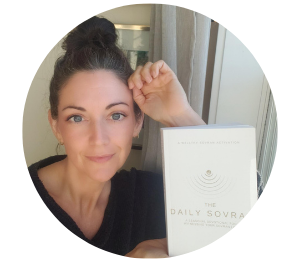
Nicole Connor is a Perceptual Architect, author, and sole creator of Sovran Wellth™, an ecosystem built on The Four Conditions™ that govern trust and wellth across the nine fields of life. Through this work, she establishes Perceptual Architecture as a structural, field-based discipline for making the conditions of trust visible.