

#ConsentIsNotOptional – The Unspoken Burden of Women’s Health
Response to the IWK Foundation’s “Open Letter to Women in the Maritimes”

Dear Ms. Gillivan,
You asked women to tell you the truth about our health.
27,317 did.
Now it is time to be brutally honest about the system you are speaking from within.
In your “Open Letter to Women in the Maritimes” you wrote that women feel exhausted, dismissed, and invisible in the very systems meant to support us.
You are right. Many of us live that reality every day.
But the exhaustion you describe is not just about workload, wait times, or geography. It is a predictable outcome of systemic breaches of consent and trust.
When women’s boundaries are institutionally ignored, minimized, or rewritten in documentation, it teaches us that speaking up will not protect us.
That is what makes women delay or avoid seeking care.
It is not because we are just uninformed. It is because we are routinely treated as if we are not the absolute authority over our own body, and have experienced what happens when we tell the truth to a system that refuses to hear it.
Your letter names the symptoms – delays, dismissals, invisibility – but not their cause; a health system that does not reliably uphold consent, repair breaches of trust, or allow women to see the truth of what happened to them in writing and on the record.
As President and CEO of the IWK Foundation, you are asking the public to fund health systems such as IWK Health, without first revealing how those systems respond when a woman raises harm or questions of consent.
That omission is not small. It goes to the core of what your message actually reveals: the women in your survey are living the consequences of broken trust and breached consent.

What Your Letter and the Deloitte Report Leave Out
Your open letter and the Deloitte report speak at length about symptoms and statistics.
You highlight delays, misdiagnoses, mental-health strain, perimenopause, menopause, chronic pain, and the load women carry. You make the economic case for investing in women’s health. You call for a national strategy.
But you speak of avoidance as if it were the starting point, instead of the consequence of what happens after women lose trust.
Women appear to delay or avoid seeking care because they have already, in many cases, experienced harm, dismissal, or breaches of consent within these systems. The refusal to return for care is not the problem to be solved; it is simply the evidence of a deeper one.
Until a health system such as IWK Health, or any institution providing public care, can hold itself accountable for the harm that created that avoidance, no amount of investment, strategy, or survey data will build trust.
Because consent is not a peripheral issue in women’s health. It is the root condition that determines whether women will seek care at all.
That analysis is missing from your materials, even though it is almost certainly present within your data.
How IWK Health Appears to Function in Practice
When a woman reports harm at IWK Health, she does not meet a clear and accountable process. Instead, she encounters a self-protective structure.
In my personal documented experience, the process operates as follows:
Her harm is described as an “unfortunate experience” and reclassified as “feedback” or a “complaint,” even when she is placing the institution on constructive notice regarding consent or rights-related matters.
That reclassification redirects the matter into internal quality-review channels protected under the Quality Improvement Information Protection Act (QIIPA). Under that legislation, the institution may conduct an internal review while the woman who raised the concern is not involved in the process and is informed that she cannot access the full record of what was reviewed, who was interviewed, what was concluded, or what corrective action, if any, was taken.
This creates the appearance of a structurally one-sided pathway: the institution can investigate privately while the affected party is excluded from the record of that investigation. In practice, a good-faith attempt to obtain remedy can be functionally repurposed to create a pre-emptive defence narrative.
If the matter is deemed serious enough, it may be escalated into IWK Health’s insurance and legal structure. At that point, communication is taken over by external legal counsel, and IWK Health asserts that it does not engage directly with patients on “legal matters.”
Within this structure, the same external counsel represents both IWK Health and its insurer - the entity financially responsible should remedy be required.
This particular alignment of representation appears to remove any independent channel between institutional duty and insurance risk, resulting in a single coordinated defence position that activates only once the woman retains legal representation of her own.
Ironically, the visible faces of this process are often women; patient-relations staff, executives, and legal counsel. Though their titles differ, their collective function, in effect, is to shield the institution from risk. Behind that shield, consent-related harm is not treated as a governance failure requiring transparent repair. It is treated as a legal liability to be managed.
At present, there appears to be no transparent, non-litigation pathway through which a woman can:
speak directly with an institutional decision-maker,
see the source of the harm formally acknowledged, and
observe the corrective process recorded on the public record.
That is not what “we see you, we hear you” looks like in practice.
It is what institutional self-protection looks like.
And it is the precise structure that teaches women not to come forward again.
Who Is Paying for This?
That structural design has a cost, and it is not theoretical.
Institutional insurance and external legal defence for IWK Health are funded, at least in part, through public resources. It can therefore be reasonably assumed that the same pool of public funding and charitable giving that women believe supports care also sustains the institution’s capacity to manage accountability through legal containment.
Women are then informed by retained counsel that if they wish to seek formal accountability, they must retain their own lawyer and file a claim with the Supreme Court of Nova Scotia before the insurer will engage in discussions about the alleged harm.
By IWK Health’s own correspondence, the institution states that it cannot communicate directly with a patient once a matter becomes “legal,” nor can it “direct the insurer or the insurer’s lawyer,” even when the same external counsel represents both.
The result is a structure in which women must personally fund their access to answers against an institution already publicly financed to defend itself, while also armed with an internal investigation based on her reported harm, that is now held in privilege, and was collected in the name of “quality improvement.”
So it appears the institution’s avoidance is financed publicly.
The woman’s search for accountability is financed personally.
When the Foundation asks the public to give “for women’s health,” this appears to be part of what those funds sustain in practice.
How Responsibility Is Shifted Away from the Institution and Providers
There is another pattern your letter and report do not acknowledge.
When women raise issues of institutional harm at IWK Health, they are repeatedly reframed as matters of individual clinician conduct. Consent failures, record handling, and procedural breaches are redirected away from the institution and toward the “care of a particular physician,” then referred to the College of Physicians and Surgeons of Nova Scotia or the Canadian Medical Protective Association.
Providers practice inside systems they did not design. Policies, consent protocols, documentation standards, and review processes are determined by leadership and governance, not by the person standing at the bedside.
When those systems allow consent to be ignored or rewritten, or allow complaints to be reclassified and contained, the responsibility is not limited to one provider. It extends to the institution and to its insurer.
Yet the operational and emotional load is shifted downward - onto clinicians, and onto the woman who must now navigate another complaint process, in another venue, under another set of rules.
Your own survey recognizes that women feel they must “piece together their own care.” What remains unacknowledged is that many of us are also being forced to piece together our own path to accountability.
Many women delay or avoid seeking care because they have already learned that reporting harm often leads to narrative management and risk containment, rather than transparent accountability and correction.
The avoidance you describe is not just resistance to care. It is resistance to re-engagement with a process that has already failed to respect or protect us.
Where the Foundation Stands in This Structure
It is important to be precise.
The IWK Foundation is a not-for-profit organization that raises funds to support IWK Health. It operates as a separate legal entity, governed by its own President, Chief Executive Officer, and Board of Trustees. Its stated purpose is to raise money in support of women’s, children’s, and youth health.
It is also a matter of public record that:
the Chief Executive Officer of IWK Health, and
the Chair of the IWK Health Board of Directors
serve as Trustees of the IWK Foundation.
In practice, this creates structural overlap. The same leadership responsible for IWK Health’s internal processes related to consent, harm, and accountability also hold positions in the organization that receives and stewards charitable funds raised in the name of improving women’s health.
It is therefore reasonable to question whether IWK Health’s silence becomes a reputational and fiduciary risk for the Foundation itself. As President and CEO of the Foundation, and as a fiduciary partner to IWK Health’s leadership, you carry a duty to understand the institutional processes that your fundraising indirectly sustains.
When the Foundation publishes a survey and commissions a Deloitte report that speaks powerfully about women’s suffering but omits how systems like IWK Health respond when women report the harms that cause that suffering, it does not read as advocacy. It reads as protection.
Protection of an institutional reputation.
Protection of donor relationships.
Protection of legal and insurance alignment.
Protection of a governance structure that does not appear capable of self-correction.
The result is that the Foundation is not only raising money to support care. It is also, in effect, helping to finance a system that shields the institution from the women whose experiences it publicly claims to champion.
What Must Come Before National Leadership
You are calling for a National Women’s Health Strategy. You want IWK Health and the IWK Foundation to be recognized as leaders in that conversation.
But leadership begins with integrity.
If there is:
no clear, accessible, non-litigation pathway for women to address consent-related harm and see it corrected,
no separation between complaint systems and legal defence,
no protection against leadership subrogating its responsibility onto providers, and
no transparent accounting of how much is spent on legal and insurer strategy compared to documented remedy,
then an institution that requires women to enter legal-defence structures just to be heard after consent is challenged and harm is reported, cannot truthfully present itself as a champion of women’s health.
You said, “If not now, when? If not us, who?”
I say, “Not you. And not right now.”
If the IWK Foundation, in partnership with IWK Health, wishes to speak credibly about women’s health, the following actions must come first:
The leadership and boards of both the institution and the foundation must jointly audit consent governance and harm-response processes within IWK Health.
Make the primary accountability pathway visible, accessible, non-litigious, and affordable to the women already harmed.
Publish transparent financial data showing how much money is being allocated to defence of harm versus acknowledgment, repair, and correction.
Revisit your survey data and the Deloitte report to issue a transparent addendum that addresses breaches of consent, reporting of harm, and loss of trust among the 27,317 women who participated.
Only then, in my opinion, do you qualify for a seat on the national stage.
Women in the Maritimes absolutely recognize ourselves in your survey.
Many will also recognize themselves in this description of a system that turns our harm into a legal problem and tells us to find and fund our own way through it.
As long as systems like IWK Health maintain governance structures that require women to pay, financially and emotionally, simply to stand in front of the truth, no campaign can honestly claim to be centering women’s health.
You asked us to tell you the truth.
This is mine.
If any part of my account does not reflect your facts, I invite the leadership of IWK Health and the IWK Foundation to clarify it in writing.
How that clarification is approached will show what is true:
whether this was an isolated experience;
a gap in governance; or
evidence of a system operating exactly as it is currently designed.
Respectfully,
Nicole
Author’s Note
This letter is offered as a matter of public interest and is based on lived and documented experience. It is intended to invite public conversation, transparency, accountability, and lawful correction where appropriate.
Update | January 27, 2026
On January 27, 2026, the Auditor General of Nova Scotia tabled Action for Health: Key Performance Indicators, an audit examining whether Nova Scotia’s health system reporting supports transparency, accountability, and public trust.
The report identifies widespread issues, including missing or ineffective targets, incomplete and excluded data, undisclosed changes to measurement methodologies, and the absence of cohesive, patient-visible accountability mechanisms.
My letter describes the human experience of a system whose structural failures have now been independently documented by the Auditor General of Nova Scotia.
Although the audit does not address consent or individual harm-response pathways directly, it confirms the broader governance conditions that make the experiences described in this letter predictable rather than exceptional.
The full report is available here: https://oag-ns.ca/audit-reports/action-health-key-performance-indicators
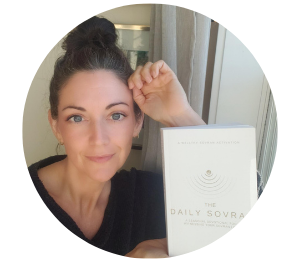
Nicole Connor is a Perceptual Architect, author, and sole creator of Sovran Wellth™, an ecosystem built on The Four Conditions™ that govern trust and wellth across the nine fields of life. Through this work, she establishes Perceptual Architecture as a structural, field-based discipline for making the conditions of trust visible.
Have you sent this to the IWK’s board? This is a governance failing and needs to be addressed.